EMAIL ADDRESS:
contact@sfopa.org
contact@sfopa.org
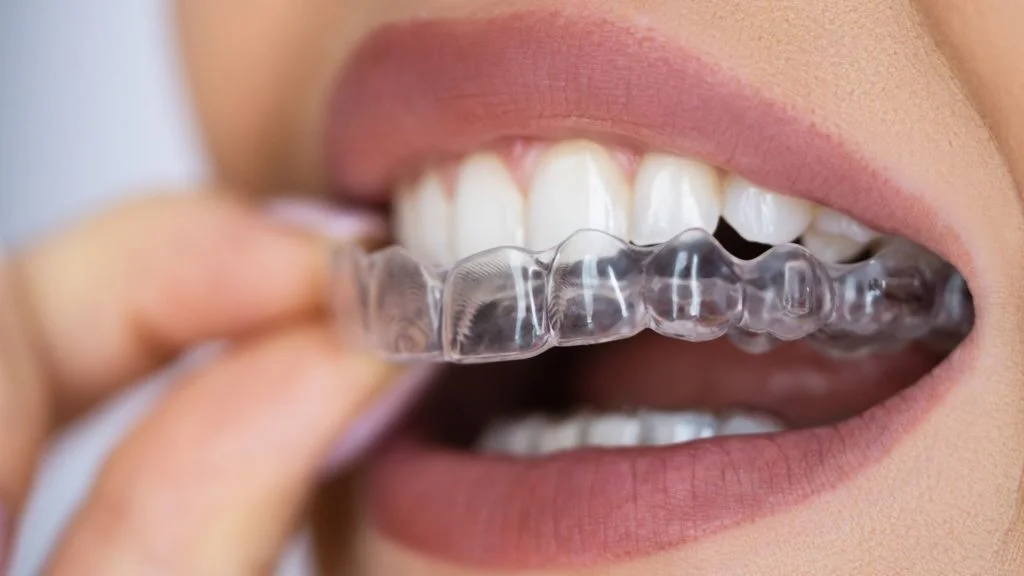
Orthodontics is no longer just for teenagers. More and more adults are seeking treatment to correct their teeth alignment, improve their functional comfort, and enhance their smile—often using clear aligners. These discreet aligners have profoundly changed the way patients are treated, particularly those who want to balance orthodontic treatment with their professional lives and aesthetic needs.
For a long time, many adults avoided orthodontic treatment, either because they were afraid of wearing visible braces or because they lacked information about the benefits beyond aesthetics. The situation has changed for several reasons.
First, as life expectancy has increased and greater importance is placed on oral health, patients want to keep their teeth in good condition for as long as possible. Correcting misalignment can make brushing easier, reduce wear caused by misalignment, and improve periodontal stability.
Furthermore, professional and social environments place a high value on the appearance of one’s smile. Crowded teeth or misaligned front teeth can affect self-confidence, particularly in customer-facing professions. Clear aligners offer a discreet solution that allows people to consider orthodontic treatment without drastically altering their appearance during the process.
Finally, technological advances (digital impressions, 3D planning, and the printing of aligner sets) have made aligner treatments more predictable in many cases, which has boosted the confidence of both practitioners and patients.
Clear aligner treatment involves a series of clear aligners that are worn for most of the day (often 20 to 22 hours a day). Each aligner applies gentle forces to the teeth, following the treatment plan established in advance by the orthodontist.
The first step is a comprehensive clinical examination: an assessment of the bite, the dental arches, the supporting bone, and the temporomandibular joints, as well as X-rays and photographs. The orthodontist then determines whether clear aligners are appropriate for the patient’s case or whether another treatment option should be considered.
Next comes the digital (or conventional) impression, which allows for the creation of a 3D model of the dental arches. Using this model, specialized software helps the dentist virtually plan the various stages of tooth movement. The treatment is typically divided into a series of aligners, with each aligner corresponding to a small, programmed movement.
The patient receives a set of numbered aligners and changes them at the prescribed intervals (usually every one to two weeks). Regular appointments allow the dentist to monitor the treatment progress, make adjustments as needed, and ensure that oral health remains optimal.
Aesthetics is the reason most commonly cited by patients. Clear aligners fit seamlessly into daily life: they are barely noticeable during conversation and can be briefly removed for a meal or a special event, provided that the overall wear time is maintained.
Beyond the fact that the treatment is invisible, the ability to preview the treatment plan in 3D software also has a positive psychological impact. Patients can visualize the expected outcome, understand the rationale behind the adjustments, and become more actively involved in the process.
But it would be an oversimplification to view aligners as merely a cosmetic tool. By improving tooth alignment and bite, adult orthodontics can:
These factors help prevent tooth decay, periodontal disease, and certain muscle or joint pains associated with malocclusion.
Dental crowding or poor occlusion can lead to a range of medium- and long-term consequences: localized wear, fractures of weakened cusps, periodontal overload, and discomfort while chewing. Several studies highlight the importance of a balanced occlusion for the longevity of teeth and restorations.
By realigning the teeth and correcting their position, treatment with aligners helps to:
For some patients, this helps stabilize prosthetic or implant-based treatments, or prepares the groundwork in advance so that restorations are less invasive (for example, placing veneers in a corrected dental position rather than compensating for malposition).
Adult orthodontics can also be integrated into a multidisciplinary approach: periodontology, oral surgery, cosmetic dentistry (teeth whitening, ceramic restorations), and treatment of TMJ disorders when indicated with caution.
Treating an adult is not the same as treating a growing adolescent. Several factors require careful consideration.
On the one hand, the alveolar bone and periodontal tissues have a history: pockets, recessions, and areas of resorption may be present. Movements must be planned with a detailed understanding of the bone support and mechanical stresses. Close periodontal monitoring is essential for certain patients.
On the other hand, adults may have missing teeth, dentures, or existing implants. In such cases, tooth movement must be integrated into an existing or planned prosthetic environment, which requires close coordination among the orthodontist, general dentist, implantologist, and prosthodontist.
Finally, aligners are not the solution for every situation. Significant rotations, pronounced vertical movements, certain skeletal cases, or extreme crowding may require other techniques, sometimes combined with orthognathic surgery. An initial evaluation by a trained practitioner is therefore crucial.
Finally, success depends largely on compliance: for an aligner to be effective, it must be worn for the prescribed number of hours. The practitioner must therefore ensure the patient is motivated, clearly explain what is at stake, and suggest strategies to encourage compliance (digital tracking, reminders, regular appointments, support).
As with any orthodontic treatment, the active phase is only the first part of the process. Once the goals have been achieved, the results must be stabilized using appropriate retainers: night guards, bonded wires, or a combination of both, depending on the case.
In adults, retention is often planned as a long-term measure, sometimes for life, because the tissues remain susceptible to changes over the years (periodontal changes, muscle forces, bone remodeling). Aligners can sometimes be reused as night guards or adapted as retainers, providing continuity that patients appreciate.
The role of the orthodontist and the treatment team is to explain this “maintenance” aspect from the very beginning, to avoid any disappointment and ensure a shared understanding of the issues surrounding stability.
The development of clear aligners has led to a wide variety of options, ranging from treatments supervised by trained orthodontists to remote solutions with little or no medical oversight. However, treatment with clear aligners remains acomplex medical procedure that must be based on a comprehensive diagnosis, a personalized treatment plan, and rigorous clinical monitoring.
Practitioners who are members of the French Society of Aligner Orthodontics (SFOPA) are committed to continuing education and the exchange of scientific knowledge regarding these techniques. The SFOPA organizes conferences, workshops, and educational sessions dedicated to aligner orthodontics, incorporating the latest clinical data and feedback from the field.
Choosing an SFOPA member means working with a professional: