
EMAIL ADDRESS:
contact@sfopa.org
contact@sfopa.org
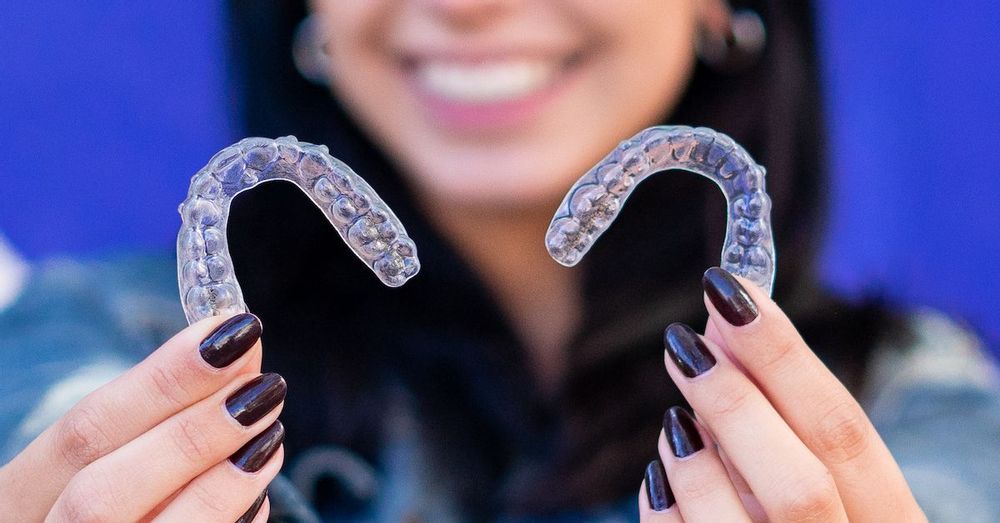
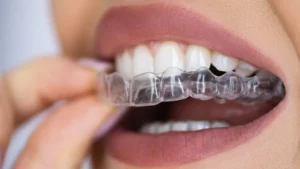
Over the past two decades, clear aligners have evolved from an innovative solution for a few simple cases to a central tool in modern orthodontics. By 2025, they will account for a growing share of treatments for both adolescents and adults, and their development is accompanied by rapid technological innovations: digital planning, advanced 3D printing, new materials, and artificial intelligence tools.
This article provides an overview of the major trends in invisible orthodontics in 2025 and the role that scientific societies such as the SFOPA can play in guiding these developments.
For decades, orthodontics has been primarily associated with metal brackets and visible wires. While these systems remain the gold standard in terms of versatility and biomechanical control, they present aesthetic, hygienic, and sometimes psychological challenges, particularly for adults and some adolescents.
The first invisible orthodontic solutions took the form of more discreet ceramic brackets, followed by lingual braces placed on the inner surface of the teeth. Clear aligners have expanded these options by offering a removable, virtually invisible device that fits seamlessly into daily life.
Today, invisible orthodontics is no longer just about aesthetics. It is part of a comprehensive approach that combines patient comfort, ease of hygiene, advanced customization, and digital integration of treatment.
Recent market research shows sustained growth in the clear aligner sector. Globally, the market is already worth several billion dollars, and projections indicate significant growth by 2030, driven by demand from adults, rising living standards, and the widespread adoption of digital technologies in dental practices.
Several factors are driving this trend:
In this context, the role of trained orthodontists and professional societies is crucial to ensuring the judicious use of these devices and preventing the market from being dominated by purely commercial approaches.
The rise of clear aligners is driven by several major innovations, which continue to evolve.
Conventional silicone impressions are gradually being replaced by high-definition intraoral scanners. These devices enable highly accurate 3D modeling of the dental arches, reduce the discomfort associated with traditional impressions, and simplify the transmission of data to laboratories and aligner platforms.
For the practitioner, immediate digitization makes it easier to analyze models, communicate with patients, and archive them. For the patient, this means shorter and less invasive appointments.
Using the digital model, specialized software allows for the virtual planning of tooth movements, step by step, with three-dimensional visualization. The orthodontist defines the treatment goals, the sequence of movements, the anchorage sites, and the constraints to be considered (biomechanical, periodontal, and occlusal).
These planning tools offer several advantages:
3D printing plays a key role in the production of aligners. Depending on the system, either the intermediate models onto which the aligners are thermoformed or the aligners themselves can be 3D-printed from the digital treatment plan.
Next-generation 3D printers offer:
This technology also paves the way for more flexible organizational models: centralized laboratories, outsourced manufacturing, or, in some cases, in-office production of limited runs under the orthodontist’s supervision.
Recent research has focused on multilayer polymers that combine mechanical strength, controlled elasticity, and enhanced transparency. The goal is to:
Some developments are also exploring additional properties: increased resistance to staining, antibacterial effects, and shape memory better suited to the kinetics of tooth movement.
Artificial intelligence is beginning to be used to optimize several stages of the aligner treatment process:
At the same time, mobile apps allow patients to regularly take photos of their aligners while wearing them and send the images to their orthodontist, who can then adjust the frequency of appointments, identify any complications, or encourage daily wear.
These innovations do not replace clinical judgment, but they provide additional ways to personalize and ensure the safety of treatments.
The benefits of aligners are now well documented:
However, clear aligners are not a one-size-fits-all solution. Their effectiveness depends on:
Conversely, primarily commercial use—without a comprehensive diagnosis or rigorous follow-up—can lead to unpredictable results, significant instability, and even periodontal or joint complications.
The popularity of clear aligners has led to the emergence of so-called “direct-to-consumer” services, in which patients take their own impressions or visit a scanning center on an as-needed basis, without a full clinical examination or in-person follow-up.
While some of these solutions promise lower costs and greater simplicity, they raise several questions:
Orthodontic telemedicine can be a useful complementary tool when integrated into a structured treatment plan led by a trained orthodontist. However, it cannot completely replace the initial clinical examination or follow-up appointments when the situation requires them.
Given the rapid growth of the market and the increasing technical sophistication of these devices, several challenges are emerging:
The French Society of Aligner Orthodontics (SFOPA) is one of the first scientific societies entirely dedicated to aligner orthodontics. Its mission is to promote evidence-based practice and to foster research, education, and the exchange of experiences related to these techniques.
Specifically, SFOPA:
As the range of invisible orthodontic options continues to expand rapidly, this scientific and educational approach is essential to ensure that aligners remain, above all, atool for promoting patient health—and not merely a consumer product.